
Loading...
Serving Guilford, CT and surrounding areas. (475) 900-0283
Replace a cracked, shifting, or slippery walkway with a properly graded concrete sidewalk that drains away from your home and lasts for decades.
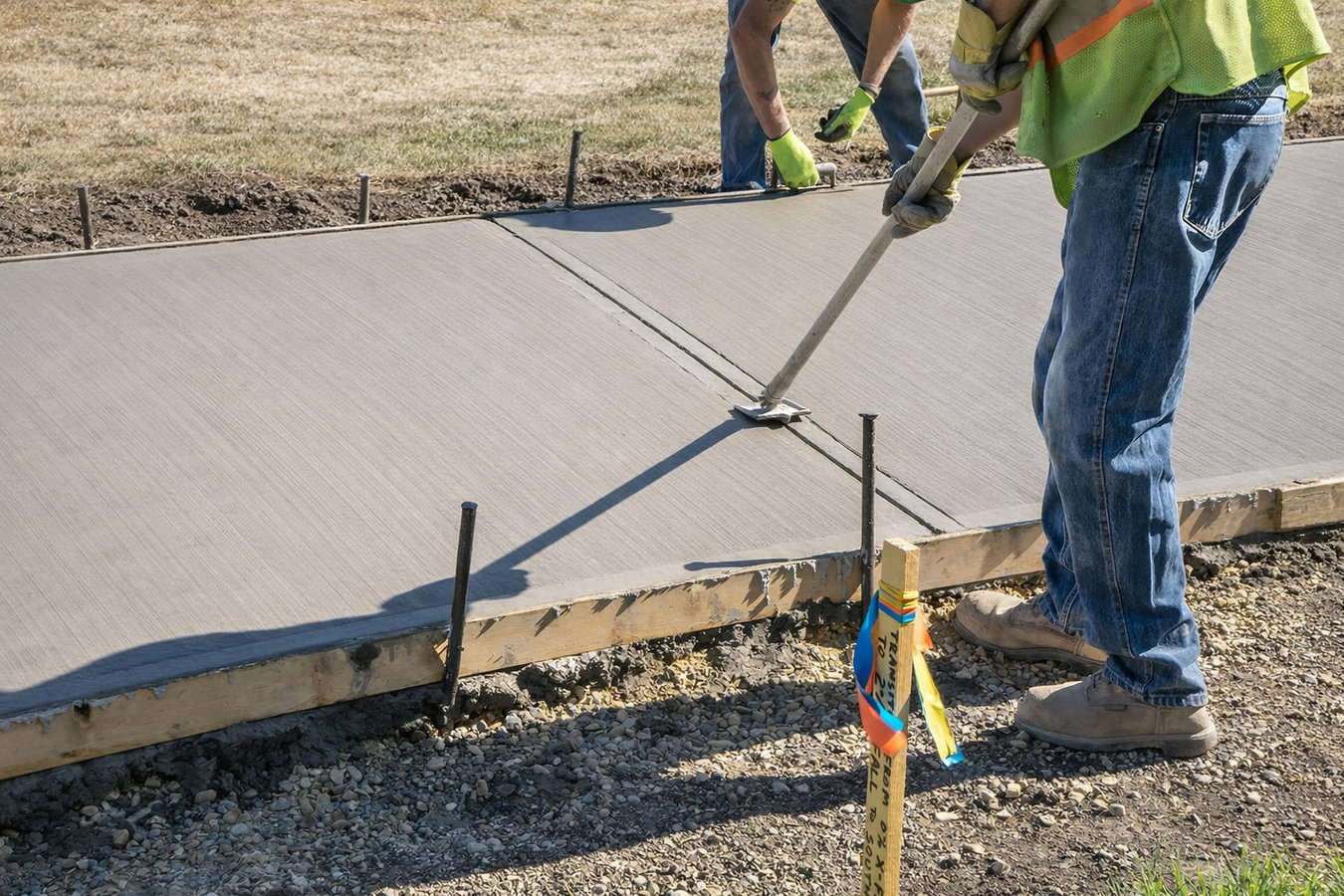
Concrete sidewalk building in Guilford typically takes one to two days of active work - demolition, base prep, forming, and pouring - and the finished surface is ready for light foot traffic within 24 to 48 hours, though full strength develops over the first month.
A crumbling or shifted walkway is more than an eyesore. In Guilford, where freeze-thaw cycles run hard from December through March, a deteriorating sidewalk gets worse every winter as water works into the cracks, freezes, and widens them. If sections have started shifting or the surface is flaking, patching rarely holds through a second or third hard winter - a full replacement is usually the smarter investment. Many homeowners also tie a new sidewalk into a broader curb appeal project alongside a new concrete driveway.
The Portland Cement Association maintains practical guidance on residential concrete construction at cement.org, including why base preparation and curing time matter so much for long-term performance.
If you can feel a bump or a step where two sections of your sidewalk meet, the ground underneath has moved. In Guilford, this often happens because frost heave pushes slabs upward over the years, or tree roots have grown under the concrete. A shifted slab is a tripping hazard and usually cannot be fixed by patching - it needs to be reset or replaced.
If the top layer of your sidewalk is peeling off in thin chips after a hard winter, the concrete is deteriorating from the inside out. This is a common result of years of freeze-thaw damage combined with road salt or ice-melt products - both heavily used in coastal Connecticut winters. Once flaking starts, it tends to accelerate, and patching rarely holds for long.
A well-built sidewalk should shed water away from your home. If you see puddles sitting on the surface after rain, or water running toward your foundation, the slope is wrong. Standing water speeds up concrete deterioration and can contribute to basement moisture problems - a real concern for many Guilford homeowners near the shoreline.
Hairline cracks in concrete are normal and not usually a problem. But if you can fit a coin into a crack, or if cracks are spreading in a spiderweb pattern, the structural integrity of that section is compromised. Wide cracks let water in, which freezes and expands each winter, making the crack larger - a cycle that will eventually break the slab apart.
We handle the full project from first visit through final inspection. That starts with a proper site assessment - looking at the existing grade, soil conditions, and access - before we ever quote a number. The base preparation is the most critical phase: we excavate to the right depth, lay and compact a gravel base, and slope everything so water drains away from your home rather than toward it. For most front walkways, we use a broom finish that provides texture and grip in wet or icy conditions. If you want something that stands out more, our garage floor concrete and decorative finishing options can be applied to walkways as well.
Every sidewalk project includes control joint placement at the right intervals - those shallow grooves cut into the surface that give the concrete a planned place to accommodate shrinkage, so any cracking happens along those lines rather than randomly across the slab. Thickness is another variable we size to the job: a standard residential walkway is poured four inches thick, but sections that cross driveways or carry occasional vehicle weight get six inches. If you are replacing a sidewalk as part of a larger project, we can coordinate the work with your driveway to keep the timeline and site access manageable.
Suits homeowners replacing an aging path from the driveway or street to the front door with a level, properly drained concrete walkway.
Best for homeowners with a heavily deteriorated or shifted existing walkway that patching can no longer address.
Ideal for connecting a driveway, patio, or rear yard with a durable concrete path that handles foot traffic in any weather.
For homeowners who want a broom or stamped finish that ties the walkway visually to a patio or driveway project.
Guilford experiences dozens of freeze-thaw cycles every winter - temperatures drop below freezing at night and climb above it during the day, sometimes repeatedly in the same week. Each cycle pushes water in and out of tiny pores in the concrete, slowly breaking the surface apart. This is why base preparation and the right concrete mix matter far more here than in a warmer climate, and why sealing every few years is a practical necessity rather than optional maintenance. Homeowners in North Branford and East Haven face the same freeze-thaw conditions, and we build every sidewalk in the area to the same standard.
Guilford's historic neighborhoods include a large share of homes built before 1980, and many of those original walkways were poured thinner and without the gravel drainage base that current standards require. Coastal soil conditions near the shoreline also vary - some properties have clay-heavy ground that holds moisture and shifts more than inland areas, which means the excavation depth and base thickness need to be sized to what your specific yard presents. The Town of Guilford Building Department requires permits for new sidewalk construction and full replacements, and a town inspector checks the work before the forms come off. We handle that entire process so you do not have to.
We schedule a short visit - typically 20 to 30 minutes - to look at the grade, soil conditions, and access before giving you a firm price. We respond to all requests within one business day. You leave the conversation with a written estimate that covers demolition, base prep, and the pour.
For most new sidewalks in Guilford, we pull a building permit from the Building Department before work begins. The permit process typically adds a few days to a week before we can start, so we factor that into the timeline we give you upfront - no surprises.
The crew removes the old concrete, excavates the soil to the right depth, and compacts a gravel base. We also call 811 ahead of time to have underground utilities marked if any digging is involved - this is required by Connecticut law and protects your property.
After forming and pouring, the surface is ready for light foot traffic in 24 to 48 hours. A town inspector checks the work before forms are removed - we coordinate that visit. Once complete, we haul away the old concrete, rake the surrounding area, and walk you through what to avoid during the first 28 days.
No obligation. We handle the permit and inspection - you just approve the plan.
Guilford's soil varies - rocky glacial till in some areas, clay-heavy ground near the shoreline, sandy fill in others. We assess your site before quoting so the gravel base depth and drainage slope match what your yard actually presents, not a one-size-fits-all standard.
We file the building permit with the Town of Guilford and coordinate the required inspection as part of every project. That means the work is on record, inspected by a third party, and will not create complications when you sell your home.
We have been working in Guilford and the surrounding shoreline communities since 2015. That means we know how the Building Department runs its inspections, which neighborhoods have ledge rock close to the surface, and what the freeze-thaw cycle here actually does to concrete over time.
Connecticut law requires utility marking before excavation, and we call 811 on every dig job as a matter of course. This protects your gas lines, irrigation, and electrical - and it means there are no unexpected stops mid-project because an unmarked line turned up.
The steps above are what make a sidewalk that holds up through 25 winters versus one that needs attention by the third. If you want to verify contractor registration requirements in Connecticut, the Connecticut Department of Consumer Protection has a public lookup tool for licensed home improvement contractors.
Combine your walkway project with a garage floor replacement for a clean, consistent finished surface from the street to your interior.
Learn MoreCoordinate a new sidewalk with a full driveway replacement to handle the entire front of your property in a single, efficient project.
Learn MoreBook your free estimate now - spring permits take time, and the calendar fills up quickly once the season opens.