Loading...
Serving Guilford, CT and surrounding areas. (475) 900-0283
Advanced Guilford Concrete is a concrete contractor serving Milford, CT with pool decks, driveways, patios, retaining walls, and foundation work. We have served this area since 2015 and know the freeze-thaw cycles, clay soils, and shoreline neighborhoods - from Woodmont to Devon - that shape every concrete project in Milford.
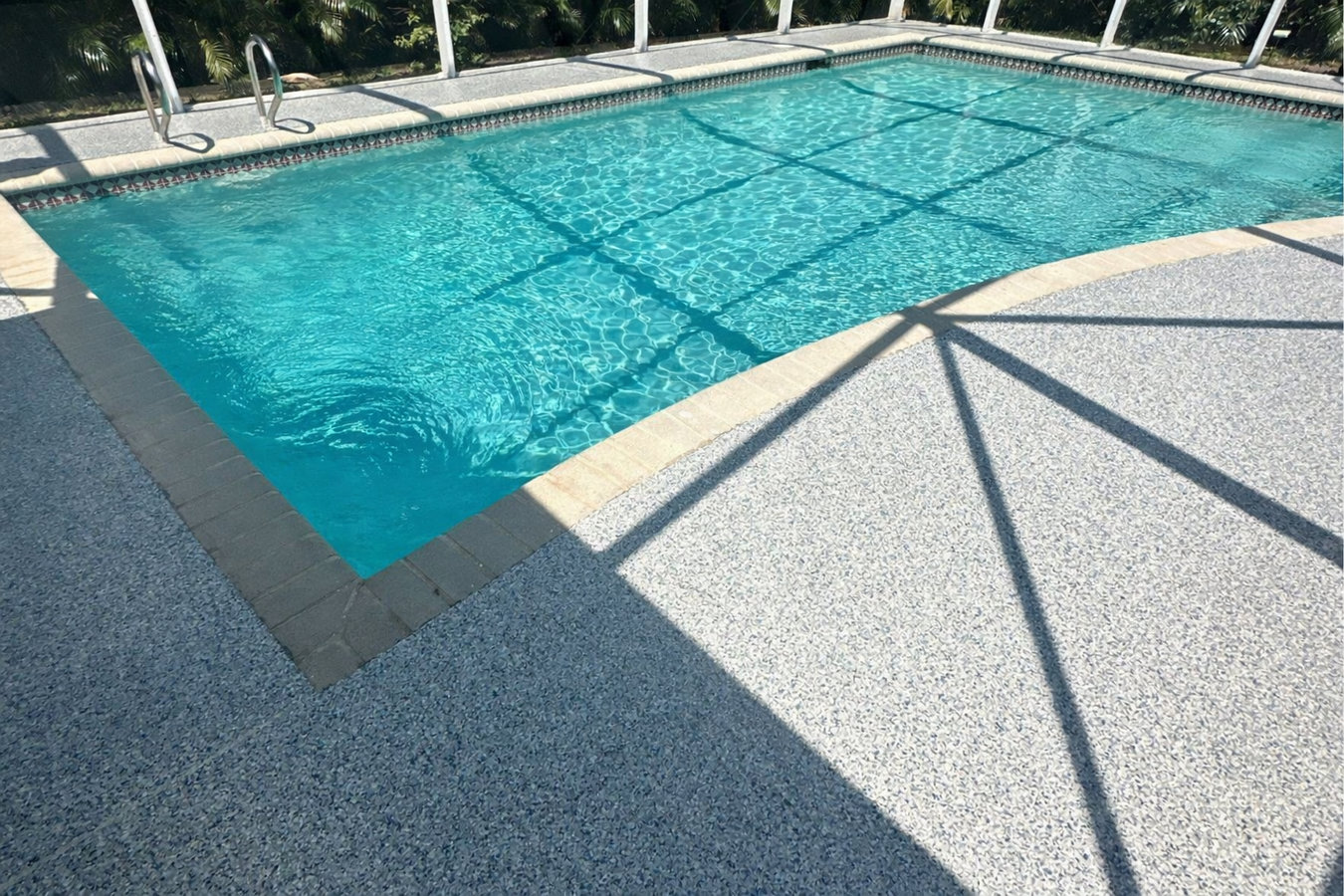
Milford has a high concentration of residential pools, particularly in neighborhoods set back from the water where larger lots allow for in-ground installations. Pool decks here take a beating from Connecticut winters - freeze-thaw cycles crack unsealed concrete around pool perimeters, and Milford's coastal moisture accelerates that deterioration. Concrete pool decks designed with the right drainage slope and control joint spacing hold up to Milford's conditions far longer than bare slab pours that do not account for local climate.
Most Milford homes were built between the 1940s and 1980s, and many original driveways from that era are now past their useful life. Clay-heavy coastal soil holds water after rain rather than draining it away, which accelerates sub-base erosion and causes slabs to crack and settle. A full driveway replacement with proper base prep and drainage cuts the long-term repair cycle that older Milford properties often get trapped in.
Milford homeowners near Walnut Beach and Silver Sands State Park use their yards hard through a long outdoor season, and a concrete patio outlasts wood decking in Milford's salt-air and humid summers without the annual maintenance. Inland neighborhoods like Devon have larger lots with room for traditional patio layouts, while shoreline areas often benefit from smaller, well-drained slabs designed with flood exposure in mind.
Milford's mix of gently sloping lots and coastal clay soil creates conditions where retaining walls are both common and frequently failing. Clay expands when saturated and pushes against wall faces, while poor original drainage behind the wall accelerates the problem. Properly engineered concrete retaining walls with drainage aggregate and weep holes handle Milford's saturated soil conditions without the cracking and tipping that affects older walls throughout the city.
Milford's older housing stock - Cape Cods, colonials, and split-levels built between the 1940s and 1970s - frequently shows foundation issues tied to original construction that did not account for the soil movement and water pressure that coastal Connecticut winters produce. Flood zone properties near the Housatonic River and Long Island Sound face additional pressure from seasonal groundwater rise. A new foundation installation addresses those conditions with materials and drainage designed for Milford's specific exposure.
Entry steps on Milford homes take the full force of freeze-thaw cycling each winter - water infiltrates cracks in the riser faces, freezes, and splits the concrete apart over successive seasons. Steps that have settled away from the house or cracked through the full tread are a safety hazard and a liability. New concrete steps poured with footings set below the frost line and properly tied to the structure stop the seasonal movement that destroys original steps over time.
Milford is a city of about 54,000 people with roughly 17 miles of coastline along Long Island Sound. Most of its housing stock was built between the 1940s and 1980s, putting a large share of homes in the 40- to 80-year age range where concrete driveways, patio slabs, and foundation walls have accumulated decades of freeze-thaw stress. Unlike inland Connecticut towns, Milford's coastal position means temperatures cross the freezing point repeatedly through the winter rather than settling into a long freeze - each crossing is a cycle that forces water in concrete to expand and contract. Multiply that by decades and the effect on unprotected slabs is visible on almost every block in older neighborhoods like Devon and the streets closer to downtown.
Milford's soil adds another layer of difficulty. Much of the city sits on clay-heavy coastal soil that holds water after heavy rain and shifts when it freezes. That soil movement is the main reason driveways crack from below rather than above, and why retaining walls that were installed without proper drainage aggregate behind them lean and fail within a decade. Shoreline neighborhoods like Woodmont and Walnut Beach face additional exposure from salt air, which attacks concrete surfaces and accelerates the scaling and spalling that comes from freeze-thaw damage. Properties in FEMA flood zones near the Housatonic River and the Sound require concrete work that accounts for seasonal groundwater pressure and drainage requirements - conditions a contractor unfamiliar with Milford will not anticipate.
Our crew works throughout Milford regularly, and we understand the local conditions that affect concrete contractor work here. We pull permits through the City of Milford Building Department and are familiar with the floodplain requirements the city applies to properties in designated flood zones near the Sound and the Housatonic River. We know which neighborhoods have tighter lot access, which areas have the heaviest clay-soil drainage problems, and which shoreline streets need drainage-specific concrete specifications to meet local requirements.
Milford is organized around I-95 and the Milford Parkway, with the downtown anchored by the Milford Green - one of the longest town greens in Connecticut, running through the center of the city and flanked by older homes and buildings that have been standing for well over a century. The Metro-North station at Milford makes the city a busy commuter hub between New Haven and Bridgeport. Waterfront neighborhoods like Woodmont and Walnut Beach sit on the Sound and draw residents who know what coastal weather does to a house over time. Silver Sands State Park along the eastern shoreline is a well-known landmark for anyone familiar with the city's eastern edge.
We also serve homeowners in North Haven to the north and New Haven just up the coast, so if neighbors or family in either town need concrete work, we cover those areas as well.
Reach us by phone or through the contact form and describe what you need. We respond within one business day and schedule a site visit at a time that works for you - no pressure, no sales tactics.
We visit your Milford property, assess the site conditions - including soil drainage, access, and any flood zone considerations - and provide a written estimate before any work is agreed to. There is no charge for the visit, and the estimate explains exactly what is included.
We handle all required permit applications with the Milford Building Department. Once permits are in hand and your schedule is confirmed, we arrive on the agreed date with the crew and equipment needed for the job.
Concrete is poured, finished, and protected according to project specs. We clean up the site at the end of each work day. Before we leave the job, we walk you through what was done, what to expect during the curing period, and what to watch for as the concrete settles into service.
We serve homeowners all across Milford - from Woodmont and Walnut Beach to Devon and downtown. Call us or submit the form and we will get back to you within one business day.
Milford is a city of about 54,000 people on Long Island Sound in New Haven County, founded in 1639 and organized around one of the longest town greens in Connecticut. The city stretches from the Sound north toward the Woodbridge town line and is divided into recognizable neighborhoods and villages with distinct characters. Downtown Milford around the green has older commercial buildings and homes dating back to the 18th and 19th centuries. Devon, to the west along the Housatonic River, has a mix of older single-family homes and small multi-family properties. Woodmont and Walnut Beach to the southeast are tight-knit shoreline communities where original summer cottages have been converted to year-round homes over the decades. The city Wikipedia entry gives a good overview of Milford's geography and history for anyone new to the area.
Milford's housing stock is dominated by Cape Cods, colonials, and split-levels built in the postwar decades, with smaller ranch homes and converted cottages filling out the coastal neighborhoods. Roughly 70 percent of homes are owner-occupied, which reflects the city's character as a place where people plan to stay. Milford sits directly between New Haven and Bridgeport on I-95 and the Metro-North New Haven Line, making it a natural commuter stop for people working in either city. We also serve homeowners in West Haven to the northeast and in East Haven further up the coast - both are areas we cover regularly.
Get a durable, well-finished concrete driveway that boosts curb appeal.
Learn MoreTransform your backyard with a solid, long-lasting concrete patio.
Learn MoreSafe, level sidewalks built to meet local standards and last for decades.
Learn MoreStructurally sound retaining walls that manage erosion and grade changes.
Learn MorePrecision-poured interior and exterior concrete floors for any project.
Learn MoreCustom concrete steps built for safety, strength, and lasting appeal.
Learn MoreProperly engineered slab foundations for homes and commercial buildings.
Learn MoreExpert foundation installation ensuring structural integrity from the start.
Learn MoreCommercial-grade concrete parking lots built for heavy, repeated use.
Learn MoreIf your driveway, patio, pool deck, or foundation needs attention, call us today or submit a free estimate request - we work throughout Milford and respond within one business day.