Loading...
Serving Guilford, CT and surrounding areas. (475) 900-0283
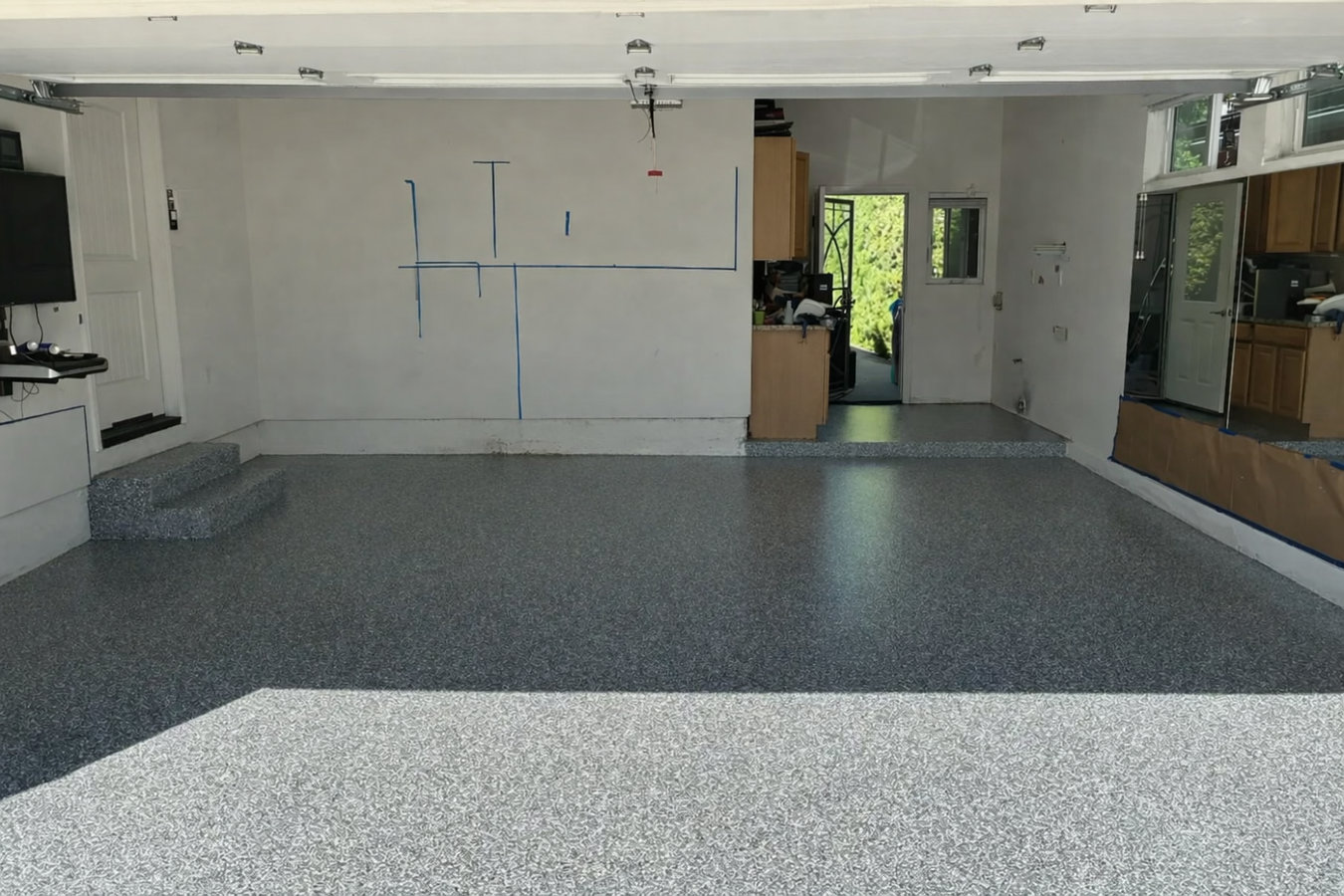
Cracked, damp, or uneven concrete floors do not fix themselves. We pour new floors with the subbase prep and moisture management that Guilford homes need.
Concrete floor installation in Guilford covers new garage floors, basement slabs, and utility space floors - the process involves removing old material, compacting a gravel base, and pouring to the right thickness for how you plan to use the space, with most residential projects completed in one to two days of active work.
Guilford has a large share of homes built before 1970, and many of them have original slabs that have settled, cracked, or heaved over decades of Connecticut freeze-thaw cycles. Replacing a floor in a home like this is different from a new installation - the old slab comes out first, the base gets re-graded, and any drainage issues that caused the original failure get addressed before anything is poured. Many homeowners who call about concrete floor installation also ask about garage floor concrete when they are working on an attached or detached garage at the same time.
We pull permits, coordinate town inspections, and give you a written estimate after visiting your site - not a ballpark number over the phone.
Small hairline cracks are often cosmetic, but cracks wide enough to catch a coin or that run in long irregular lines suggest the slab has shifted. In Guilford, this kind of movement is often caused by freeze-thaw cycles working on a poorly prepared base over many winters. If the edges of a crack are at different heights, the floor likely needs more than patching.
Damp spots, puddles, or a persistent musty smell after wet weather mean moisture is coming up through or around the slab. This is common in Guilford's lower-lying neighborhoods and near coastal areas where groundwater sits close to the surface. A new slab with proper moisture management solves this in a way patching or sealing the existing floor cannot.
When the top layer of a concrete floor breaks away in thin chips or looks rough and pitted, the concrete is deteriorating from the inside out. This is often caused by years of road salt tracked in from Connecticut winters, or by a floor originally poured with too much water in the mix. Once this process starts, replacement is usually more cost-effective than resurfacing.
A floor that has settled unevenly can make the space hard to use safely, cause water to pool in low spots, and signal that the base beneath the slab has shifted. In older Guilford homes this kind of settling is common and tends to worsen over time rather than stabilize on its own.
We install concrete floors in garages, basements, utility rooms, and converted spaces throughout Guilford. Every job starts with a site visit so we can assess the existing conditions - soil type, drainage, current subbase, and how the space will be used - before we quote anything. Guilford's glacial-till soil can be uneven in how it drains and settles, so the gravel base under a slab needs to be carefully compacted rather than rushed. For interior spaces like basements, we install a vapor barrier underneath the slab to block moisture from rising up through the floor.
We also handle floor replacement in older homes where the original slab has failed - this involves breaking out the existing concrete, re-grading the base, and addressing any drainage problems before pouring fresh. If you are improving multiple spaces, our concrete pool decks and garage floor concrete services can be scheduled together to save mobilization time and cost.
For homeowners replacing a cracked or failing garage slab or pouring a floor in a new garage or addition.
Best for older Guilford homes with settled or moisture-damaged original slabs that are limiting how the space can be used.
Suited for detached workshops, utility buildings, or spaces with dirt floors being converted to year-round use.
The right choice for any lower-level space in Guilford's coastal or low-lying neighborhoods where groundwater is a factor.
Two things drive most of the concrete floor problems we see in Guilford: the freeze-thaw climate and the housing age. Connecticut winters mean fresh concrete is vulnerable from roughly November through March - pouring during that window requires heated enclosures or insulating blankets to protect the curing slab. Most experienced local contractors prefer to schedule floor work between late April and October to give the slab the best chance of curing properly. The American Concrete Institute publishes cold-weather concreting guidelines that govern how we handle pours outside the ideal temperature window.
For homeowners in Guilford's coastal neighborhoods and low-lying areas, groundwater management under the slab is the other major consideration. Properties near Long Island Sound or tidal marshes can have elevated groundwater that will push moisture through an unprepared slab within a few years. We serve homeowners in Guilford as well as nearby North Haven and West Haven, where similar coastal moisture challenges apply to concrete floor work.
Call or send a message and we will get back to you within one business day. We will ask a few questions about your space and situation before scheduling a site visit - that initial conversation helps us show up prepared.
We come to your property to assess the existing conditions - current floor or ground, drainage, access for a concrete truck, and anything that affects how the job should be done. After that visit you receive a written estimate that breaks down the scope and cost.
We handle pulling the required building permit with the Town of Guilford. Once the permit is in hand and a start date is set, we will give you a clear list of what needs to be cleared from the work area before the crew arrives.
On the day of work the crew prepares the base, pours and finishes the concrete, and walks you through the curing period - typically 24 to 48 hours before foot traffic, and about a month before heavy loads. A town inspector signs off once curing is complete.
Free on-site estimate, no obligation. We respond within one business day.
Most concrete floor failures trace back to the base, not the slab itself. We compact the gravel base in layers and supplement it where Guilford's glacial-till soil requires it - so the floor you get has something solid to rest on for years.
For interior floors in Guilford's coastal and lower-lying neighborhoods, we install a vapor barrier under the slab to block moisture from rising up over time. This is not optional for those areas - it is the difference between a dry basement and a damp one three years from now.
We pull every required permit and coordinate the town inspection. That means your new floor is documented - which protects your home's value if you ever sell. A contractor who suggests skipping the permit is putting that risk on you. Learn more at the Town of Guilford Building Department.
Connecticut labor rates and local site conditions - rocky ground, coastal drainage needs, aging subbases - make phone estimates unreliable. We come to your property first, so the number we give you reflects the job you actually need done.
Every floor we install in Guilford starts with a real site visit and ends with a permitted job the town has inspected and signed off on. Call us or fill out a contact form and we will get back to you within one business day.
Durable concrete decking around pools and outdoor water features, designed to handle Guilford's seasonal temperature swings.
Learn MoreGarage slab pours and replacements focused on vehicle loads, salt exposure, and the freeze-thaw conditions Connecticut delivers every winter.
Learn MoreProject slots for the best pouring season go fast - call or contact us today and we will get back to you within one business day.